Introduction
Getting the data
Preparing the data
Working with the data
Introduction
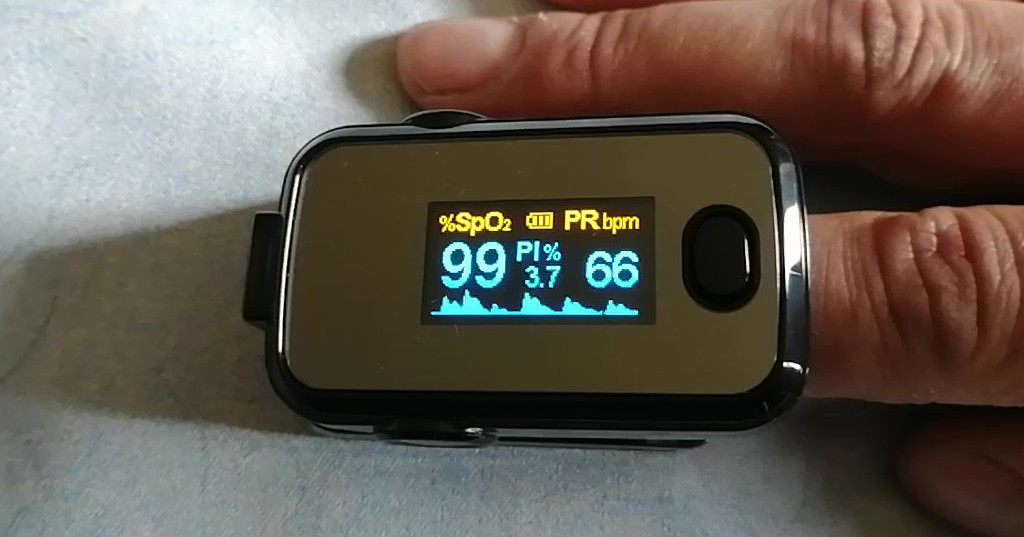
The Kernmed OLED Finger Pulse Oximeter A310 is a device that I use for simultaneous measurement of oxygen saturation (SpO2) in the blood, the pulse rate and the perfusion index by providing a plethysmograph (PPG) function. The device shows the perfusion index in a graphical way, what makes it easier to analyze an arrythmic heartbeat. Another important feature is the possibillity to activate a pulse beep, what is also very helpful to analyze arrythmias on an acustical basis. There are many devices like this available on the market for below 100$.
Background:
The A310 was my first device I have used to detect and analyze my AFib Episodes. It is a very good little helper and still in an affordable price range.
Getting the data
Sadly the most devices of this kind like the A310 as well has no data connectivity, so we have to notify the measured results manually and fix them to a notepad or an spreadsheet application like Microsoft Excel.
Preparing the data
There is no specific preparation needed, the device starts to work after being switched on and placed on the finger. Different modes data representation can be chosen.
Working with the data
As I have described earlier in my post “The AFib Diary (Being a Medical Detective)” it can be very helpful to put the collected data (manually) into an (electronic) diary for further analysis. For example the measured values SpO2, perfusion index, rest pulse can be taken every day very easily by the A310 device. Mostly I have used it while doing workout on a stationary cycling machine without any problems.
By the way it was very interesting for me to check my pulse while doing some workout on my cycling machine, after a few days of daily traning my average pulse dropped for ten beats at the same workload, while my heart adapted very quickly to the new training condition. Note: For a more intensive workout a chest strap device like the Polar H10 is probably more practical.
Here you can find a video about how AFib vs. sinus rhythm looks like on the A310 pulse oximeter.
Please always remind the Disclaimer as a condition for the use of this blog.
 Get rid of AFib Blog