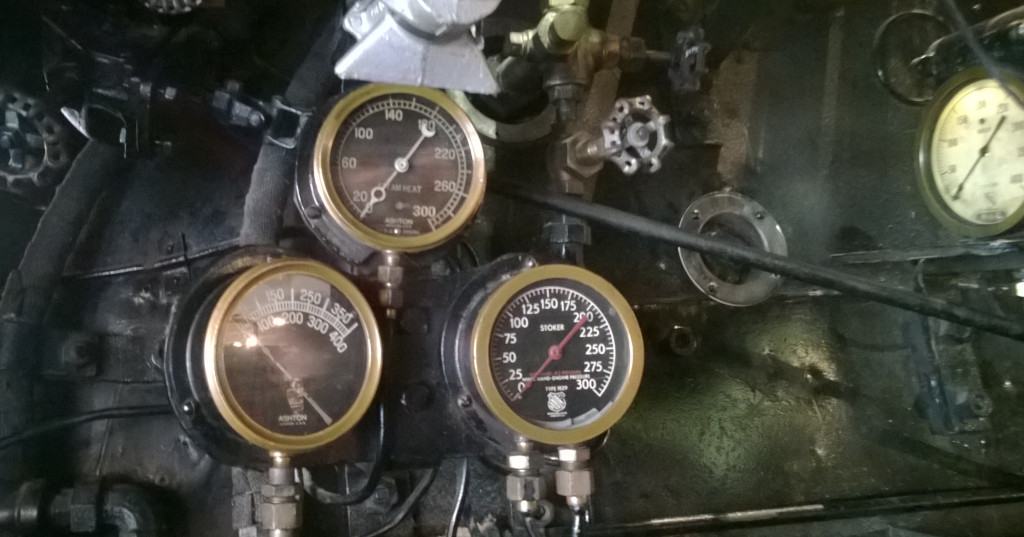
For an engineer, like me, numbers are a little bit like the “holy” grail. Engineers love to express things through numbers, especially when these numbers highlight the performance of a system the engineer has designed himself. Numbers can e.g. express a max speed of a car, the computing power of a new processor, the accuracy of a laser gun, whatever. A number, for an engineer, is something like a handrail to hold on, they provide seriousness and security. (Note: Coming from this mindset, if you had told me two and a half years ago that very soon I would find myself in the middle of a spiritual ghost healing session where two ladies would be synchroniuosly running vibrating pumpkin-sized singing bowls over my body, I would have called you crazy.)
There is a saying that I ascribe to Tom DeMarco that goes like this:
You can’t control what you can’t measure!
Tom DeMarco
While engineers are more interested and related to physical parameters of a “system” they have designed, managers unusually try to figure out numbers that describe the “economical” performance of the organizations they want to manage, what are e.g. numbers like Return on Invest (ROI) etc. . Engineers and Managers often disagree about the point what is more important “that a brake works under all conceivable and adverse circumstances or a overwhelming economic success. For the engineer the brake must of course also work on the moon, especially on the side facing away from the sun, while the manager things “if it brakes somehow it is ok”.
The managers call their “numbers” KPI (Key Performance Indicator).
At least KPIs (but maybe named differently) exist in every field of business, also in medical business and there In addition to economic considerations especially regarding the treatment indication for a specific desease in a specific patient. Such kind of a “medical KPI” could be e.g. the patients blood pressure value.
Why are numbers so important for someone who is searching for a cure?
Numbers, from my perspective, can show you if you are on the right way, but they can also be dramatically misleading.
One example:
Some time ago I saw a guy on TV, I sadly don’t remember his name, he was talking about his experience while the Vietnam War and about the “KPI’s” that were used to make strategic decisions. He said in substance from his perspective one big problem was: “If you don’t know how to measure something, then you automatically start to believe all the more in what you can measure and this can lead to very wrong decisions.”
This example is somehow close to the (problematic) way of how decision making in Western Medicine is often done. My favorite example here is the blood pressure (BP) value. In most cases it is not really clear for the doctor what is the real cause of a raised blood pressure value in a specific patient, but the BP is something that can be easily measured since Scipione Riva-Rocci has invented a machine to take those blood pressure readings. As a consequence the “treatment” is mostly only focussed on the manipulation of this specific blood pressure value and at least (more or less easily) performed by depressing it with the help of antihypertensive drugs.
Note: Please also see the article “Blood pressure targets for hypertension in older adults” and the article “The use of lower blood pressure targets for people with hypertension” from Cochrane collaboration about the questionable benefit (for the patient) of the aggressive artificial reduction of blood pressure values.
I don’t want to discuss here if Cochrane is right or wrong, there are different opinions about that, but one thing is clear as lower the “threshold” for a drug based blood pressure treatment is set as standard, as more people will get put on such a treatment plan and this will raise the “ROI” of companies that produce such kind of drugs for treatment (based on this treatment-mindset). This might be an example for the conflict stated above between the two perspectives one focussing on the perfect product and one on the maximized Return on Invest.
Is (e.g.) the blood pressure value a good KPI?
Well, when I read articles about high blood pressure (hypertention) it always sounds to me like that the high blood pressure is the disease itself, but seen from a different perspective the high BP could also be identified as a symptom with other underlying causes. Those causes have been e. g. identified as being permanently overstressed, unbalanced nutrition: e. g. too much sodium intake, overweight etc. . (Note: All things that can obviously not being fixed by a simple pill alone.)
Getting back to the above question, I would summarize: “If the ‘real problem’ is not going to be fixed, because of the KPIs (the numbers) are misleading, because it seems like e. g. the high BP itself is only a symptom and not the root cause of the problem, then the KPI might be wrong or even not complex enough to show if we are still on our way to the right direction.”
In other words: “If I put out a fire but don’t fix the problem in the power line that started it, then I still have a problem, and it’s a big one. Especially if I don’t even know that this problem still exists, because then I weigh myself safe but I am about to race towards a cliff.”
The conclusion for me out of this is: If a single (medical) KPI that is much too simple for adressing the complexity of the “reality” it might be completly misleading in finding a cure.” (Note: Please also see my post: “Curing AFib begins with asking better questions” and “Why Treatment, Fix and Cure (in AFib) are not the same“.)
This all doesn’t automatically mean that we have to throw everything away that is still existing, but it might suggest that we have to arrange the things we have (like KPIs, etc.) in a new way and combine it together with other things like maybe also new “parameters” that are sometimes hard to measure like: “Do I feel well here and now?”, “Am I physically and mentally well balanced actually?” or “Can I create a positive and healthy social interaction for myself and others?”.
Another example for a misinterpretation done by myself while focussing on a single KPI is maybe my trial in loosing body weight very quickly by doing a white rice and boiled carrot only diet.
My weight loss approach was basically inspired by the study “PREVEntion and regReSsive Effect of weight-loss and risk factor modification on Atrial Fibrillation: the REVERSE-AF study” but to be honest no one in the study had ever said that loads of rice and carrots only are the right way to loose body weight and fix my AFib condition with it.
So what happend: On the one hand my body weight droped rapidly for several kilos only after a few days, but on the other hand my AFib started to get much more worse at the same time. My natural healer told me later that the massive amounts of rice I took in probably might have depleted my water mineral depot what had put the heart into an extra unstable condition.
The important point now is that my experience doesn’t proof that the study is wrong, weight loss can still be a very important factor for getting rid of AFib, but the KPI “weight” is, as I have experienced it, not the only factor that has to be considered.
This means: Just only achieving the KPIs target value doesn’t mean anything if we don’t know about the right way in doing this. This would be like taking a trip through the mountains and blindfolding yourself beforehand. On the one hand, you will never arrive and on the other hand, you will miss the essential aspects of the journey.
As a conclusion of mine, for adressing the underlying complexity in curing AFib, it is very helpful to see AFib as a such a journey. To reach the journeys destination it is senseful to have a map, of course. But if the journey is done the first time, there is no map and therefore it is very important to create such a map while travelling to make the knowledge that was gained while travelling (including all detours and learnings) accessible to other travellers too.
This map is, if you will, the treatment plan containing a specific body training, life style change, diet plan etc. accompanied by frequently measuring parameters like the actual body weight etc. . (Note: It is important to keep in mind that while travelling (e.g. by car) the engine temperature or oil pressure are important parameters that have to be kept an eye on, but they are not the goal of the journey. Unfortunately, in Western Medicine this is sadly mixed up very often.)
For readers who are generally interested why managing complex situations (especially by experts) often end up in catastrophy I can additionally recommend the book: “The Logic Of Failure: Recognizing And Avoiding Error In Complex Situations” by Dietrich Doerner.
Another good one is: “Der Hund, der Eier legt” from Dr. Hans-Hermann Dubben, Dr. Hans-Peter Beck-Bornholdt. Unfortunately, this book seems to be available only in German, but it is a really great treasure of examples of failure, error, abuse and fraud in the interpretation of statistical data in medical research, but also other scientific disciplines.
Please always remind the Disclaimer as a condition for the use of this blog.
 Get rid of AFib Blog