One of the big challenges in all kinds of medical approaches, especially in Western medicine in my eyes, is to provide a treatment or even better a cure for a specific condition like Atrial Fibrillation (AFib, AF) that is taylored to the individual needs of the person that is or should be in focus.
What I often have experienced myself (and criticised) in Western medicine is the mindset of the “one hammer for all” thinking. From my perspective this thinking leads very easily to fatal or non optimal results for the patient, like using a screwdriver that is too big or too small for a specific screw, if “screw” is even the correct diagnosis.
So the question is: “Are there are any approaches in Western medicine that offer a pathway to individual treatments for AFib that tries to make some difference between ‘apples and pears’ or ‘screws and nails’?”
Well, yes, there are some approaches that try to make that difference.
Three of these approaches, I have stumbled over very early by my own AFib research, are the CHA2DS2–VASc, ATRIA and HAS-BLED score and from my point of view these ones should be in minimum known by every AFib “patient” (and doctor as well, what I sometimes have missed).
All of these three approaches are at least adressing one of the most commonly highlighted risks in AFib by Western medicine, they are evaluating the statistical risk of getting a stroke (CHA2DS2–VASc and ATRIA) and the risk of bleedings (HAS-BLED) caused by medications like anticoagulants known as “blood thinners” given to the patients to hopefully mitigate the stroke risks.
At first sight it seems to be very welcome to have such kind of patient individual approaches on hand, because this also opens a door for an indvidual therapy. On the second sight there are still some “questions” open I will discuss a bit more detailed further down.
How do these approaches work?
Note: Please remind in advance all of these approaches are based on “assumptions” that are resulting out of studies and can only be seen as simplified models of the “reality” like a rule of thumb. That means these models are not representing “the one and only single source of truth”, because the assumptions that have been made might not fit to everybody, in worst case they even might only fit to very few people, because of some simplifications that have been made by the scientists who have created them. For example the CHA2DS2–VASc, ATRIA and HAS-BLED score do all only evaluate “negative” risk factors like high blood pressure, diabetes etc. but no positive factors like healthy life style, obesity vs. athletic condition etc. that might compensate the negative ones.
The CHA2DS2–VASc (an update of the CHADS2 Score) and the ATRIA score are two simple to use “tools” for doctors to predict the AFib patients statistical risk of getting a stroke based on different risk factors like high blood pressure, diabetes, age, previous strokes, gender etc. . For every risk factor a specific amount of points are given and if the total score is exceeding a defined threshold the doctor will follow a standard treatment plan to reduce the stroke risk (mostly) by medication. Both approaches CHA2DS2–VASc and ATRIA do at least the same thing, but they are based on assumptions that differ a little bit, here you can find a study that is comparing the two scores. (Note: It is helpful to know both scores CHA2DS2–VASc and ATRIA to have a better basis for decision making when it comes to the discussion if medication should be taken or not.)
The medication in Western medicine that is mostly prescribed when it comes to a treatment adressing the stroke risks is commonly known as “blood thinner” and the idea behind this treatment is to prevent the formation of blood clots in the atrium of the heart while being in AFib.
Note: Please remind regarding the way this kind of medication works “blood thinner” is not the correct description by the meaning of it words.
Western medicine knows two kinds of “blood thinning” medication:
- Anticoagulants such as heparin, warfarin (also called coumadin), dabigitran, apixaban, and rivoraxaban, that should slow down the body’s process of making clots. (This is the medical standard in AFib treatment.)
- Antiplatelet drugs, such as aspirin, clopidogrel, dipyridamole and ticlopidine, should prevent blood cells called platelets from clumping together to form a clot.
A summary of these two kind of medication you can find here.
By the way: There is some scientific discussion going on if water isn’t “the real blood thinner” or maybe not. In my eyes this is a little bit funny, because water is a natural product known for millions of year but it is still not clear what effect it has (?!), but about Aspirin e.g. we mean to know it much better?! An example of this discussion you can find here. (My wish to the scientific community is: After millions of years please do a study (or two) if water (and in which amount, etc.) is maybe more helpful than medication (with serious side effects) for blood thinning.)
The third approach I have named before is the HAS-BLED score, this score works similiar to that ones shown before and should help the doctor to determine the risks in patients of getting serious side effects in bleeding when taking “blood thinning” medication. This should help to outweight if taking medication is worth the risk.
As I have stated further up this all sounds like an individual treatment approach. But, sadly, we were not talking about “Western medicine” if this “individual path” would’t be very narrow.
Example:
If you have are diagnosed by AFib and high blood pressure at an age of 42 you will get 1 point in CHA2DS2–VASc score, what means 1.3% of annual stroke risk based on this statistic model. (Note: Taking blood pressure medication will (based on the actual Version of the CHA2DS2–VASc Score) not lower your score, even if your blood pressure gets under good control!)
With a score of 1 you are classified to a moderate risk and a anticoagulant therapy “might be considered” by your doctor, especially if your HAS-BLED score is low too. At a CHA2DS2–VASc of greater or equal of 2 in man or 3 in women anticoagulation is recommend. (See here for some information about the official treatment guideline update 2019.)
The problem with this “consideration” especially at a CHA2DS2–VASc score of 1 is that not all scientific studies agree with the estimated stroke risk of that score. If we look to this swedish study e.g., we can see that the stroke risk might be also much lower (0.5% to 0.7%) than the estimated 1.3%. As a result this could mean thst many people might be “considered” for the intake of a harmful medication without providing any real benefit to them.
Another point regarding anticoagulation medication is that there is not only a risk that comes out of the unwanted sideffects of anticoagulants (e.g. bleedings in the brain, etc.). There are also very dangerous “wanted” effects what mostly means the patients increased bleeding risks that e.g. might result out of an active lifestyle like cycling, sports etc., because if an accident happens, the body has a “medication wanted” reduced ability to stop its bleedings. This factor is also not considered in the HAS-BLED score.
Another interesting paper discussing some factors about anticoagulation that are still not “considered” by the shown scoring models you can find here. (Factors like obesity vs. athletic body condition, blood pressure issues etc. are discussed there.)
This discussion is quite interesting, because a patient might question: Why should I (based on the CHA2DS2–VASc Score ) take anticoagulants on top of my blood pressure medication, if my blood pressure is “under control” (should my score not be 0 instead of 1)?
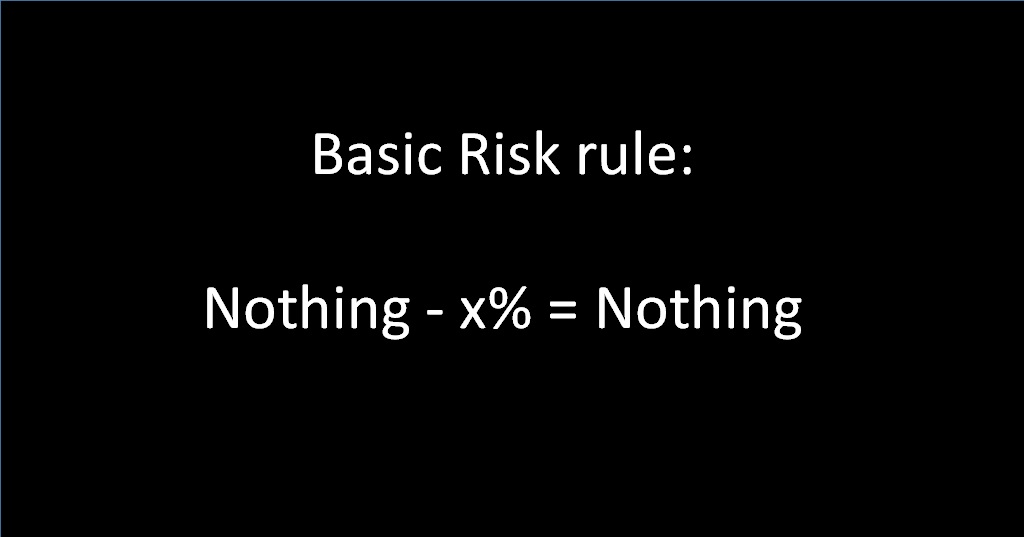
Please also remind: Another potentially misleading issue regarding the interpretation of statistical data in general is that reducing a risk by 50% to 60% (see FDA information about stroke risk reduction by anticoagulants) sounds great and is great when the reduced risk itself is very high, but if the risk is very low, reducing 60% percent of “nothing” is still nothing.
Example: If the estimated risk of stroke of 0.5% per year, which is quite low anyway, is reduced by 60% by taking anticoagulations, the risk of stroke drops to 0.2%. (Both values are very low, but we should not forget that taking anticoagulations on the other hand increases other risks such as bleeding).
Last but not least it is sadly not very often mentioned that many risk factors (like smoking, obesity, high blood pressure, diabetes etc.) could be also very often mitigated just by a “behavior change” and some simple basic knowledge without the need of medication or any other kind of medical treatments.
That this kind of behavior change could work very well and even sometimes can result in a cure of AFib itself is shown by an australian study you can find here.
My personal conclusion (not a recommendation):
- Scientific models can be helpful for decision making, but they are not “the one and only single source of truth”.
- CHA2DS2–VASc, ATRIA and HAS-BLED score should be known by AFib patients.
- Anticoagulants might have more risks than considered in scientific models like HAS-BLED that are in practical use.
- Persons with a low CHA2DS2–VASc Score of 1 (man) or 2 (women) might have a lower stroke risk than previously reported. (In those cases Anticoagulation might to be questioned more than in the past.)
- Reducing a risk of “nothing” by 60% sounds great but is still nothing.
(So why taking new unpredictable risks to do that kind of reduction?) - Many AFib related risk factors can be mitigated by a behavior change without the need of medication.
- Asking “better” questions leads to better treatments in AFib
- (Please see also the post “Curing AFib begins with asking better questions”).
Please always remind the Disclaimer as a condition for the use of this blog.
 Get rid of AFib Blog